
•
August 31, 2026
•
6 min read


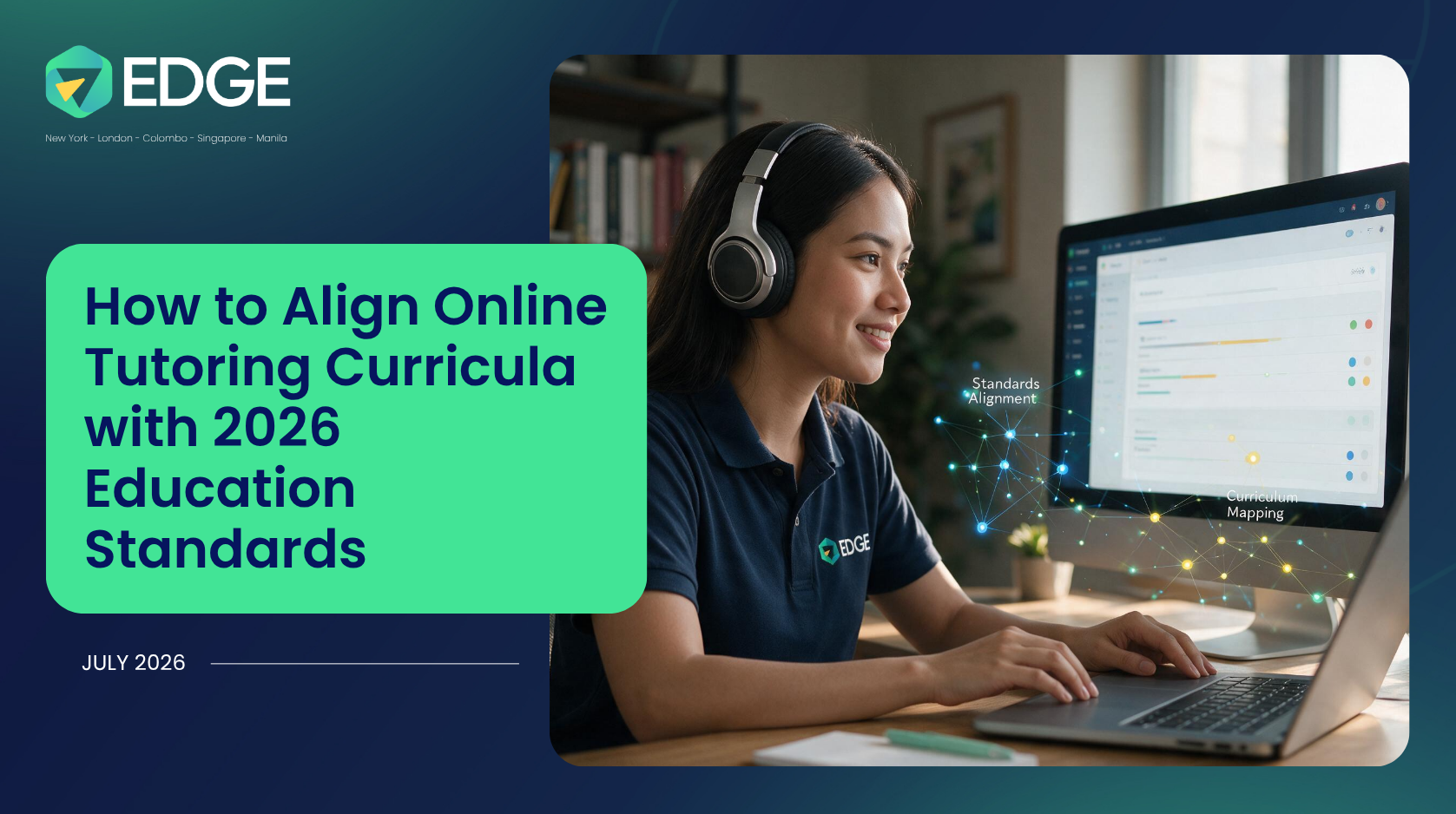
Education standards do not stay still. Curricula are revised, assessment frameworks shift, and what counted as grade level proficiency five years ago does not necessarily match today expectations. A tutoring program that is not actively tracking these changes risks reinforcing content that is out of step with what students are actually being taught and tested on in their own classrooms.
For institutions partnering with an outsourced tutoring provider, curriculum alignment is not a minor administrative detail. It is one of the clearest indicators of whether a program will genuinely reinforce classroom learning or work against it. A tutoring session that contradicts, however subtly, what a student is learning in their regular classroom creates confusion rather than reinforcement, undermining the entire point of the tutoring relationship.
Curriculum drift tends to happen gradually rather than all at once. A tutoring provider builds strong materials at launch, and those materials remain in use long after the underlying standards have shifted, simply because updating content is time consuming and easy to deprioritize against more immediate operational demands.
This is particularly common with math and language standards, which are revised more frequently than many providers account for in their content maintenance schedules. A tutoring program using materials built two or three revision cycles ago may be technically correct while still being subtly out of step with current classroom expectations, particularly around terminology, notation conventions, or the specific sequencing in which concepts are introduced.
Growth itself can accelerate this drift. A provider expanding quickly into new subjects or regions often prioritizes building new content over auditing existing content, which means older, already misaligned materials can persist even as the provider overall content library grows larger and appears, from the outside, increasingly comprehensive.
The goal is not perfection at every moment, since standards revisions are ongoing and no provider will be instantly current with every change. The goal is a visible, repeatable process that keeps drift from compounding over multiple years. A provider with a defined quarterly or termly review cycle will catch misalignment far sooner than one relying on an informal as needed approach that depends on someone happening to notice a problem.
Tutors sit closer to the actual classroom experience than almost anyone else in a tutoring organization, since they are the ones hearing directly from students about what is being taught and how. This makes tutors an underused early warning system for curriculum drift, provided a provider has built a clear channel for that feedback to travel upward rather than staying informal and undocumented.
Providers that build this feedback loop well often catch misalignment months before a formal review cycle would have surfaced it, simply because tutors are hearing about classroom content changes in real time.
The consequences of curriculum misalignment are easy to underestimate because they rarely produce an obvious, dramatic failure. Instead, they show up as quiet erosion of trust, a parent noticing their child is being taught a method that contradicts the classroom teacher, an institutional partner receiving feedback that tutoring content feels dated or disconnected from what students are actually studying, or a student becoming confused rather than clarified by a tutoring session.
These are not catastrophic failures individually, but they accumulate into a broader perception that tutoring content is not being maintained carefully, which is exactly the kind of impression that erodes institutional trust ahead of a contract renewal conversation. Providers that treat curriculum maintenance as an ongoing operational discipline, rather than a one time content build, avoid this slow erosion entirely.
There is also a direct academic cost, not just a reputational one. A student practicing an outdated method or terminology in tutoring sessions may need to unlearn and relearn material once they return to a classroom using updated standards, which wastes exactly the time and effort the tutoring relationship was meant to save.
For schools and districts evaluating a tutoring partner, curriculum alignment is worth asking about directly and specifically. A provider should be able to explain how often content is reviewed, who is responsible for tracking standards changes, and how quickly updates get incorporated once a standards revision is announced.
This matters most for high stakes subjects like math and reading, where a mismatch between tutoring content and classroom expectations can actively confuse a student rather than helping them, particularly around terminology and problem solving approaches that vary between standards frameworks. Institutions should also ask whether a provider curriculum is standardized nationally or adapted to state or regional variation, since standards can differ meaningfully even within a single country. A confident, specific answer to this question is a good sign; a vague reassurance that content is always up to date, without detail on how that is achieved, is worth pressing further on.
Curriculum alignment becomes considerably more complex once a provider serves multiple regions or countries, since standards vary not just over time but geographically. A math curriculum aligned perfectly to one state or national framework may use different terminology, sequencing, or emphasis than a neighboring jurisdiction, even when the underlying mathematical content is functionally similar.
Providers operating across multiple regions need alignment processes that account for this variation explicitly, rather than assuming a single national or global curriculum will serve every institutional partner equally well. This typically means maintaining region specific content variants, or at minimum a clear mapping of where regional standards diverge, so tutors working with students in different jurisdictions are equipped with content genuinely matched to what those specific students are being taught.
This is one of the strongest arguments for working with a tutoring provider that has genuine, established experience across multiple education systems, rather than one that built its curriculum around a single home market and is now trying to stretch it internationally without meaningful adaptation. The difference between genuine regional adaptation and a superficial relabeling of the same content is usually obvious within the first few sessions to any institution paying close attention.
EDGE Tutor maintains a structured content review cycle across its subject areas, with tutors trained to flag alignment gaps directly from their sessions with students. This keeps tutoring content current with the standards institutional partners are actually teaching to, rather than relying on a static curriculum built once and left unchanged.
Want to know how closely a tutoring partner curriculum matches your current standards? Ask EDGE Tutor for a walkthrough of our curriculum review process.