
•
•
5 min read


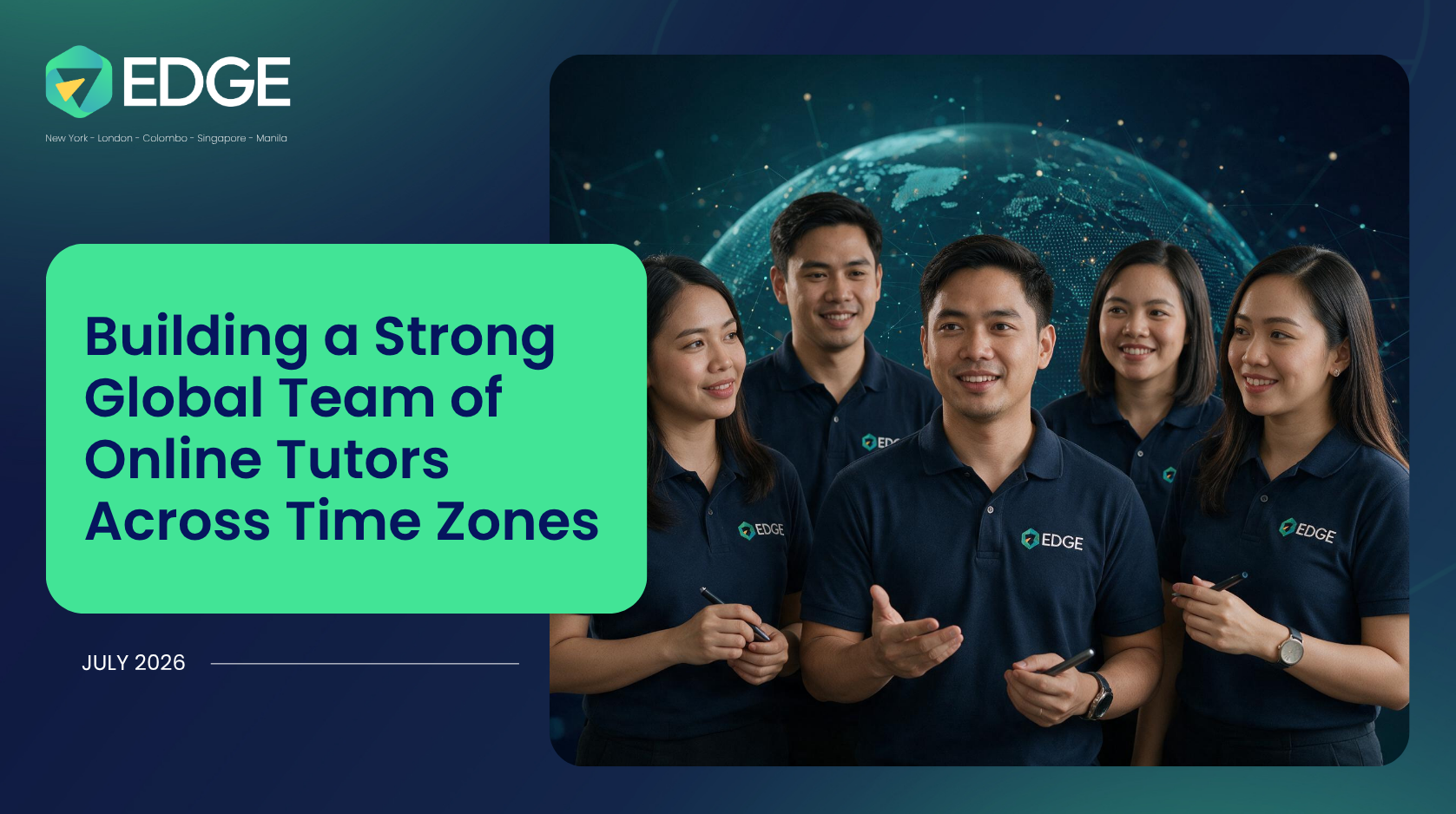
A global tutor network offers a real advantage: coverage across time zones that a regionally concentrated team simply cannot match, and access to a far wider pool of subject matter expertise. It also introduces coordination challenges that a single time zone operation never has to solve, from scheduling meetings that work for everyone to maintaining a shared sense of team identity across tutors who may never overlap during working hours.
Building a genuinely cohesive global team, rather than a loose collection of regional pockets that happen to share a company name, requires deliberate design choices that many providers underinvest in, particularly as they scale into new geographies faster than their internal culture and processes can naturally adapt. The providers that get this right treat global team cohesion as a genuine operational discipline, with specific practices and regular review, rather than an assumption that connection will simply happen on its own once enough tutors are hired across enough regions.
For institutional partners, particularly those serving students across multiple regions or countries, a global tutor network means sessions can be scheduled at hours that work for the student, not constrained by when a regionally concentrated tutor pool happens to be available. This matters enormously for international schools, expatriate families, and institutions serving students across multiple continents.
A global network also expands the pool of subject matter and language expertise available, since recruitment is not limited to whoever happens to live within a specific region. This broader talent pool often produces stronger specialist coverage, particularly for less common subjects or language combinations, than a provider confined to a single geography could realistically assemble.
There is also a resilience benefit worth noting, distinct from the scheduling convenience. A tutor pool spread across multiple regions is naturally less vulnerable to disruption from a single local event, a public holiday cluster, a regional internet outage, a local emergency, than a pool concentrated entirely in one geography, which matters for institutional partners who need consistent coverage regardless of what is happening in any single location.
Standard team meetings become genuinely difficult once a tutor team spans enough time zones that no single meeting time works for everyone. Left unaddressed, this can create a two tier team, with tutors in convenient time zones staying well connected and others drifting into isolation simply due to scheduling.
Quality consistency is a second challenge. Different regions may have different educational norms, communication styles, or expectations, and without deliberate calibration, session quality and approach can vary more than institutional partners would expect from a single provider. Left unmanaged, this variation can quietly undermine the consistency that is one of the core value propositions of working with an established, unified tutoring provider in the first place, and it tends to surface at the worst possible time, during an institutional partner review, rather than being caught proactively.
Beyond the practical mechanics of scheduling and communication, genuinely cohesive global teams invest in building shared culture and identity, something that does not happen automatically simply because tutors are nominally part of the same organization. This might include regular all-hands sessions, recorded and made available across time zones, spotlighting tutors and their work from different regions, or simply consistent messaging from leadership that reinforces a shared mission across every region the provider operates in.
Providers that neglect this cultural dimension often find that regional pockets develop their own separate identities over time, weakening the sense of belonging to a single, unified organization. This can eventually show up as inconsistency in how tutors from different regions represent the provider values and standards, even when formal quality processes remain technically consistent on paper.
Beyond language and time zone differences, tutors from different educational backgrounds often bring genuinely different assumptions about pacing, formality, and the appropriate balance between direct instruction and student led discovery. None of these differences are inherently wrong, but left uncalibrated across a global team, they can produce a noticeably inconsistent experience for students and institutional partners expecting a uniform standard.
Providers that skip this calibration work often discover inconsistency only once an institutional partner raises it, at which point the fix requires far more remedial effort than if it had been addressed proactively during team building. This is why calibration should be treated as an ongoing, scheduled activity rather than a one-time exercise completed at initial global expansion and then never revisited.
When evaluating a tutoring provider with a global tutor network, it is worth asking specifically how quality is kept consistent across regions, and how tutors in different time zones stay connected to the broader team. A provider that has genuinely solved this coordination problem will have concrete answers, not vague assurances.
It is also reasonable to ask how the provider handles a scenario where a specific region experiences a local disruption, whether that is a connectivity issue, a public holiday cluster, or something more significant, and how coverage is maintained for institutional partners relying on tutors from that region during such an event. A provider without a clear, tested answer to this question has likely not stress tested its global coordination model under real conditions.
EDGE Tutor operates a genuinely global tutor network, built with deliberate practices for cross-regional communication and consistent quality calibration, so institutional partners get the benefit of worldwide coverage without a drop in consistency across regions. This calibration work is ongoing rather than a one-time setup, reflecting the reality that a genuinely global team requires continuous investment to stay cohesive as it grows.
Need tutoring coverage across multiple time zones without sacrificing consistency? Talk to EDGE Tutor about our global tutor network.