
•
•
5 min read


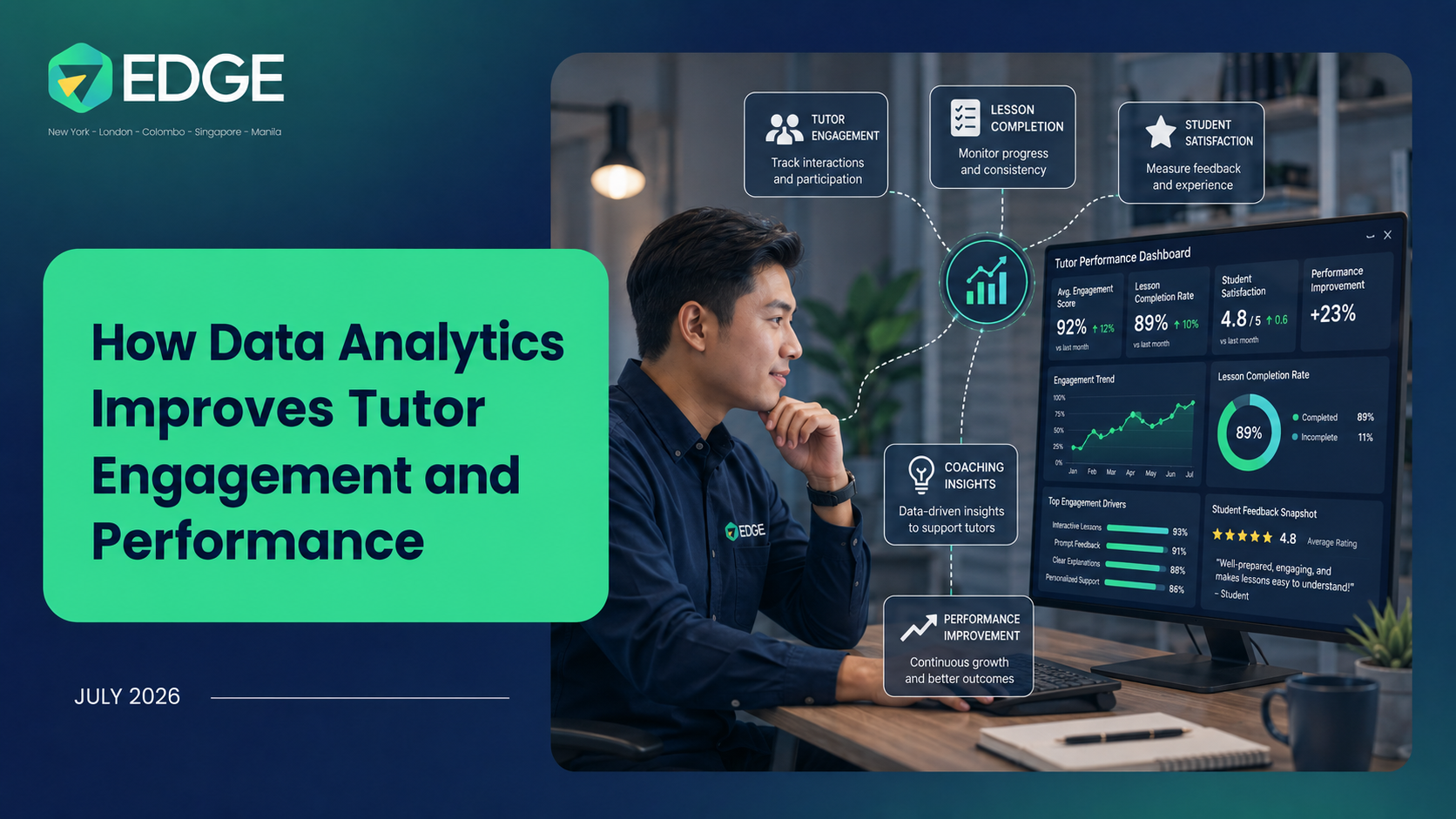
Most tutoring providers know intuitively which tutors are strong performers. Far fewer can point to the data that confirms it, or explain what specifically is driving strong versus weak session outcomes across their tutor pool. Structured data analytics closes this gap, turning scattered impressions into a system that can identify patterns, predict risk, and guide coaching decisions with real evidence behind them.
This shift from intuition to evidence is not about removing human judgment from tutor management. It is about giving that judgment better information to work with, so decisions about coaching priorities, recognition, and resource allocation rest on something more solid than whoever happens to be top of mind for a manager in a given week.
Session level data, attendance patterns, response times, student engagement signals, feedback scores, can surface patterns that are invisible from individual session observation alone. A tutor whose scores drift downward gradually over several weeks might not trigger concern from a single spot check, but shows up clearly in trend data reviewed systematically.
Analytics can also reveal patterns across the tutor pool rather than just individual performance. Which subjects consistently show lower engagement scores. Which onboarding cohorts show stronger long term retention. Whether certain scheduling patterns correlate with higher tutor burnout risk. These are questions individual session review simply cannot answer, but structured data can.
A dashboard full of metrics nobody acts on is not an analytics practice, it is decoration. The value comes entirely from connecting data patterns to real coaching and operational decisions.
Tutor analytics is often framed purely around risk detection, catching declining performance before it becomes a serious problem. This is valuable, but it overlooks an equally important use case: identifying what top performing tutors are doing differently, so those techniques can be studied and shared more broadly across the tutor community.
Providers that use analytics this way turn their strongest performers into a genuine source of organizational learning, rather than simply celebrating them individually while their specific techniques remain informally locked within their own sessions.
Analytics should inform coaching conversations, not replace them. A concerning data pattern is a starting point for understanding what is actually happening with a tutor, technical difficulty, personal circumstances, a curriculum mismatch, not a final verdict delivered without context. Providers that use data purely punitively tend to see tutors become defensive or start gaming metrics rather than genuinely improving.
The most effective approach treats data as a tool for asking better questions, not a substitute for the judgment of an experienced coach who understands the full context behind a number.
A number of predictable mistakes show up repeatedly when providers first build out tutor analytics capability. Tracking too many metrics at once, without a clear sense of which ones actually matter, produces noise rather than insight and can overwhelm the coaching staff meant to act on the data. Building sophisticated dashboards before establishing basic data quality, incomplete session records, inconsistent feedback collection, produces analysis that looks precise but rests on an unreliable foundation.
Providers that start narrow, with a small number of well chosen, reliably collected metrics, and expand deliberately from there, tend to build more genuinely useful analytics practices than those attempting to track everything at once from day one.
Any tutor analytics program that tracks individual performance data needs to be built with clear, transparent boundaries around how that data is used, who can access it, and what protections exist for tutors. Analytics systems perceived as surveillance rather than support tend to damage trust and can paradoxically make tutors more guarded and less willing to engage openly with coaching, undermining the very improvement the system was meant to drive.
Providers that communicate clearly about what is tracked, why, and how it connects to genuine support rather than punitive monitoring, build far more constructive relationships with their tutor community around data than those that roll out analytics without this transparency.
EDGE Tutor tracks structured performance data across its tutor pool and uses it to inform, not replace, human coaching conversations, giving institutional partners confidence that tutor performance is monitored systematically and addressed proactively rather than reactively. This same discipline extends to how we identify and share what our strongest tutors are doing well, not just how we catch performance concerns early.
Want to see how data driven insight shapes tutor coaching at EDGE Tutor? Ask our team for a walkthrough of our performance monitoring approach.