
•
•
5 min read


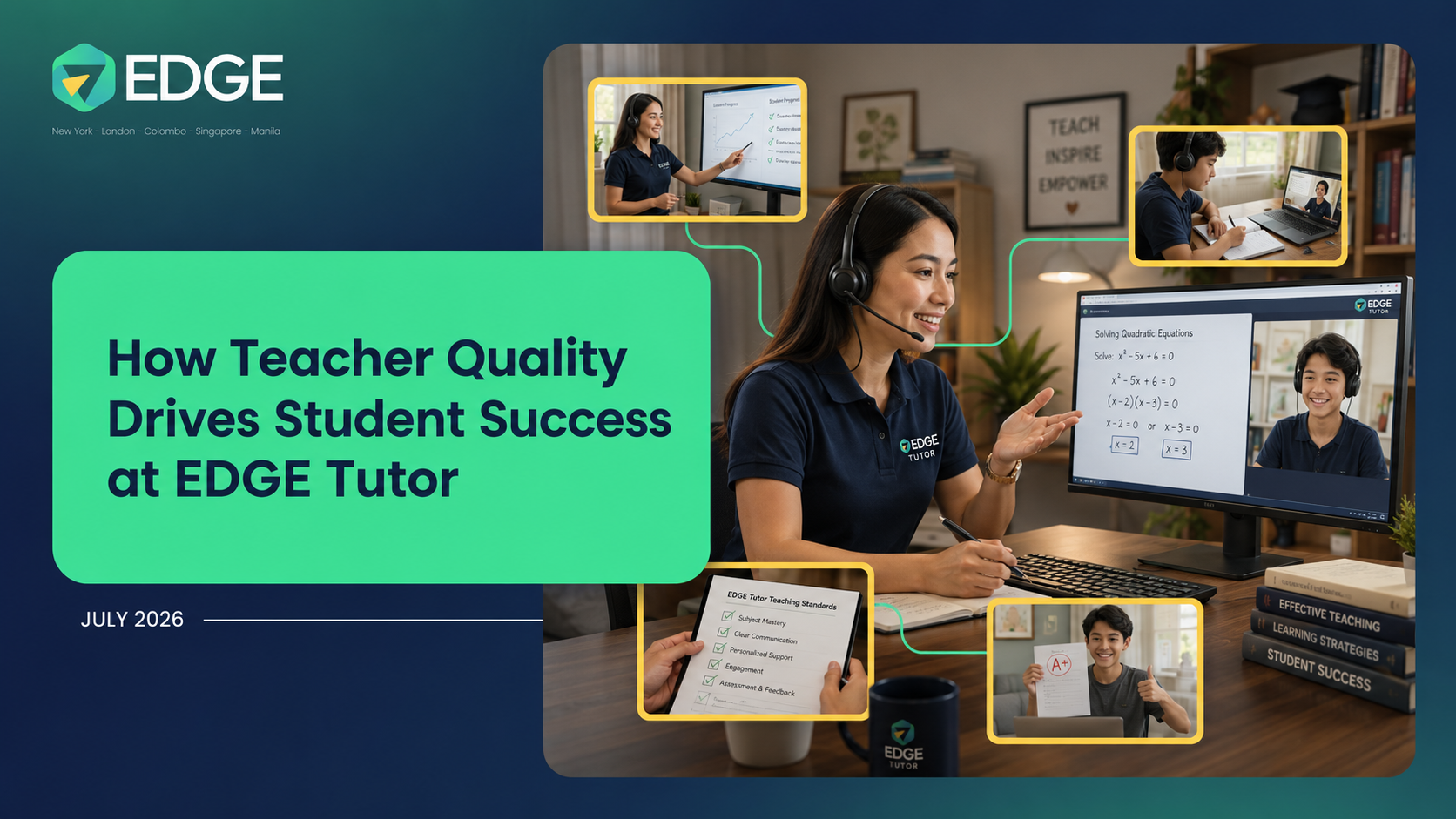
Curriculum, technology, and program design all matter in tutoring, but research and practical experience consistently point to one factor as the strongest predictor of student outcomes: the quality of the tutor in front of the student. This is not a new finding, it mirrors decades of research on classroom teacher effectiveness, but it is worth restating clearly, because it should shape how institutions evaluate and choose a tutoring partner.
This principle sounds obvious stated plainly, yet it is routinely underweighted in how tutoring programs are actually evaluated and purchased. Price, tutor availability, and platform features often dominate procurement conversations, while the harder to quantify question of genuine teaching skill receives comparatively little scrutiny, despite being the factor most directly tied to whether a program actually works.
A well designed curriculum delivered by a weak tutor produces mediocre results. A strong tutor working with a less polished curriculum can still produce excellent outcomes, because so much of effective teaching comes down to real time judgment: reading a student confusion, adjusting explanation on the fly, knowing when to push and when to slow down. These are skills that live in the tutor, not in the materials.
This does not mean curriculum and technology do not matter. They absolutely do, and they make a good tutor more effective and more efficient. But they cannot substitute for tutor quality, which is why the majority of investment in a well run tutoring program should go toward recruiting, training, and retaining strong tutors, not toward curriculum polish alone.
The benefit of genuine tutor quality is not linear, it compounds. A single strong session helps a student with the material covered that day. A consistent pattern of strong sessions, delivered by a tutor who understands a student specific learning history and adjusts accordingly, builds momentum that shows up in broader academic confidence, not just mastery of individual topics.
This compounding effect is precisely why tutor quality deserves more institutional scrutiny than it typically receives during procurement. A modest difference in average tutor quality between two providers, easy to overlook in an initial evaluation, can produce a substantial difference in cumulative student outcomes over the course of a full school year, simply because that quality difference is present in every single session rather than being an isolated factor.
Each of these elements exists to protect the same core outcome: making sure every student, regardless of which tutor they are matched with, gets a genuinely skilled instructor, not just someone who passed a basic screening call.
For a student, tutor quality shows up in specific, tangible ways: explanations that actually clarify confusion rather than just repeating the textbook, sessions that stay appropriately paced rather than rushing or dragging, and a tutor who notices when something is not working and adjusts rather than pushing forward regardless. These moments accumulate across a tutoring relationship into real, measurable academic progress.
This is also why tutor consistency matters so much. A high quality tutor who works with the same student over time builds context and rapport that make each subsequent session more effective than the last, compounding the benefit of strong initial teaching skill.
Institutions that select a tutoring partner primarily on price, without adequately weighting demonstrated tutor quality, often discover the true cost only after the program is already underway, in the form of disappointing outcome data, frustrated teachers and parents, and the difficult decision of whether to invest in switching providers mid-year or persist with a program that is not delivering the intended results.
This delayed cost is precisely why upfront diligence on tutor quality, however harder it is to evaluate than price or headline availability, pays for itself many times over. A slightly higher cost partner with genuinely strong, well supported tutors consistently outperforms a cheaper option with weaker screening and development practices, when measured against the outcomes that actually matter to an institution.
One of the persistent challenges in this area is that teacher quality is genuinely harder to measure than credentials or years of experience, which is exactly why so many procurement processes default to those easier to verify proxies instead. A tutor with an impressive academic background does not automatically translate into strong real time teaching judgment, and a tutor with a less conventional background can sometimes outperform more credentialed peers precisely because of how they were screened, trained, and developed.
Institutions willing to look past credentials alone, and ask a potential tutoring partner how they actually measure and verify teaching quality, get a far more accurate picture of what students will actually experience.
When institutions evaluate tutoring partners primarily on price or headline tutor availability, they risk underweighting the single factor most likely to determine whether the program actually works: genuine tutor quality. Asking detailed questions about screening, training, and ongoing quality assurance is not a bureaucratic exercise, it is the most direct way to evaluate whether a provider will actually move the needle for students.
EDGE Tutor has built its entire operating model around protecting and developing tutor quality, because it is the single factor most directly connected to the outcomes our institutional partners are actually trying to achieve.
Want to understand exactly how EDGE Tutor builds and protects tutor quality? Talk to our partnerships team for a full walkthrough of our approach.